Plans & seats
How seats work, what each plan includes, and what happens when you reach a limit.
CoNote bills per team, and capacity is measured in seats and notes.
What a seat is
A seat is one unit of capacity, and seats used = active team members + working integrations. A team with three people and two working integrations is using five seats. An integration starts using a seat once it is connected and working: one that is still connecting, or whose checks are failing to start, does not use a seat yet. A working integration that later starts failing keeps its seat until you turn it off, so you can fix it without losing your place. Turning off an integration, removing a member, or blocking a member frees a seat. Blocked members keep their record but do not count toward your seats.
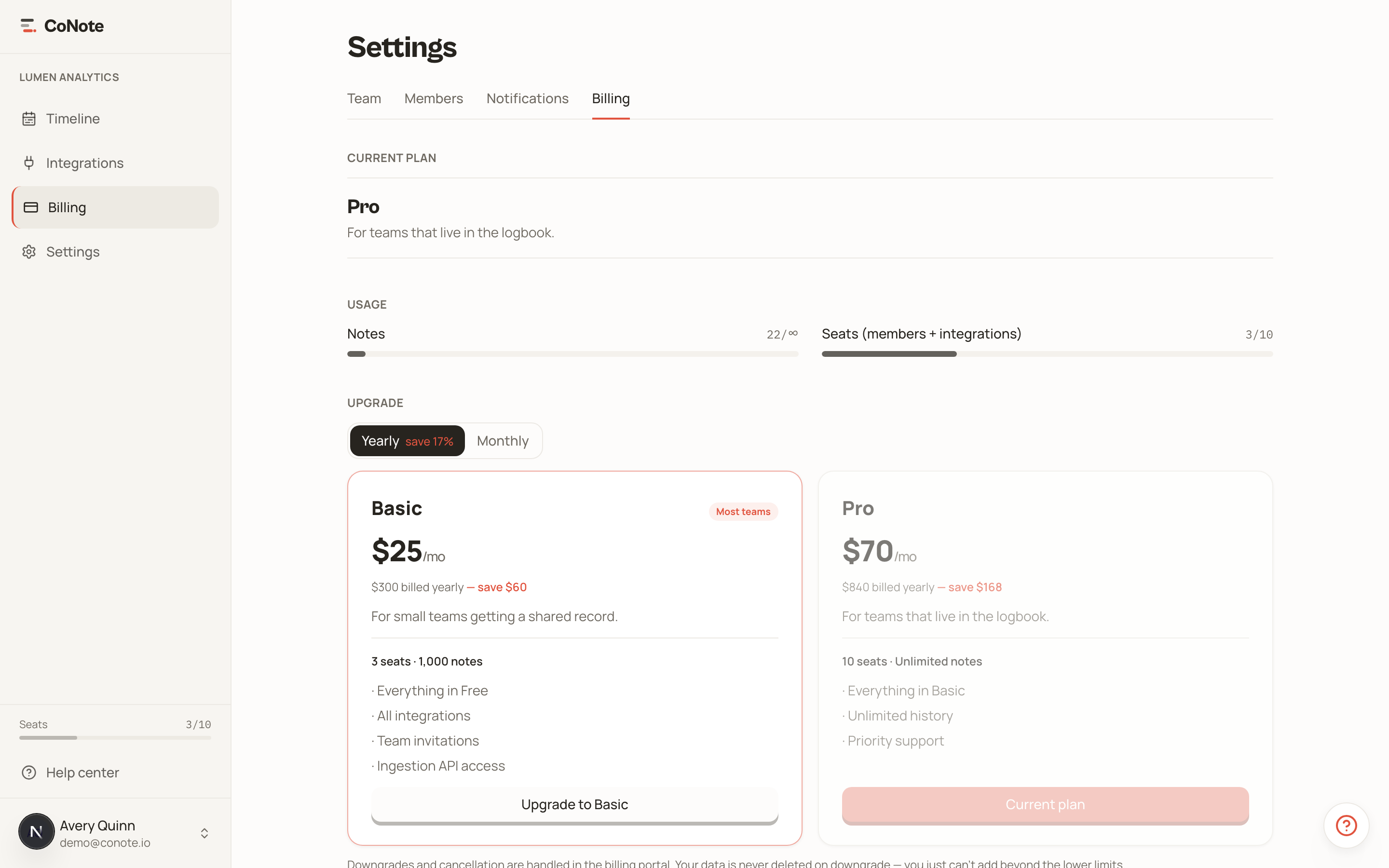
The plans
| Plan | Seats | Notes |
|---|---|---|
| Free | 2 | 100 |
| Basic | 5 | 1,000 |
| Pro | 10 | 10,000 |
| Enterprise | Unlimited | Unlimited |
The Free plan needs no card. Paid plans can be billed monthly or yearly — paying yearly gives you two months free.
Reaching your note limit
When you reach your note cap, CoNote keeps collecting new notes — it never drops them. The extra notes are locked: they stay hidden from your timeline and logbook until you upgrade. You'll see a locked-notes teaser at the bottom of the timeline and a count on the billing page.
We email everyone on the team (and add an in-app notification) when you cross 80%, 90%, and 100% of your notes, then send a weekly reminder while notes are locked. Upgrading unlocks the oldest locked notes first, up to your new plan's headroom. Nothing is ever deleted.
Reaching your seat limit
Seats work differently: once every seat is in use, you can't add another member. You can still set up another integration, it just waits with the status Needs a seat and starts collecting the moment you upgrade or free a seat. We email the whole team once when all seats fill up.
Because integrations use seats, the cheapest way to free capacity without upgrading is to turn off an integration you're not really using.